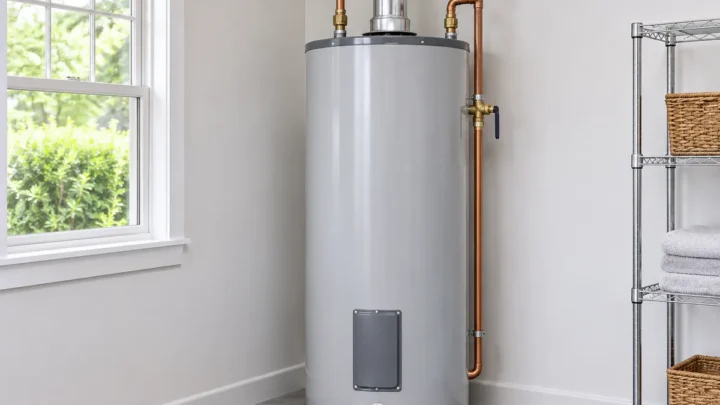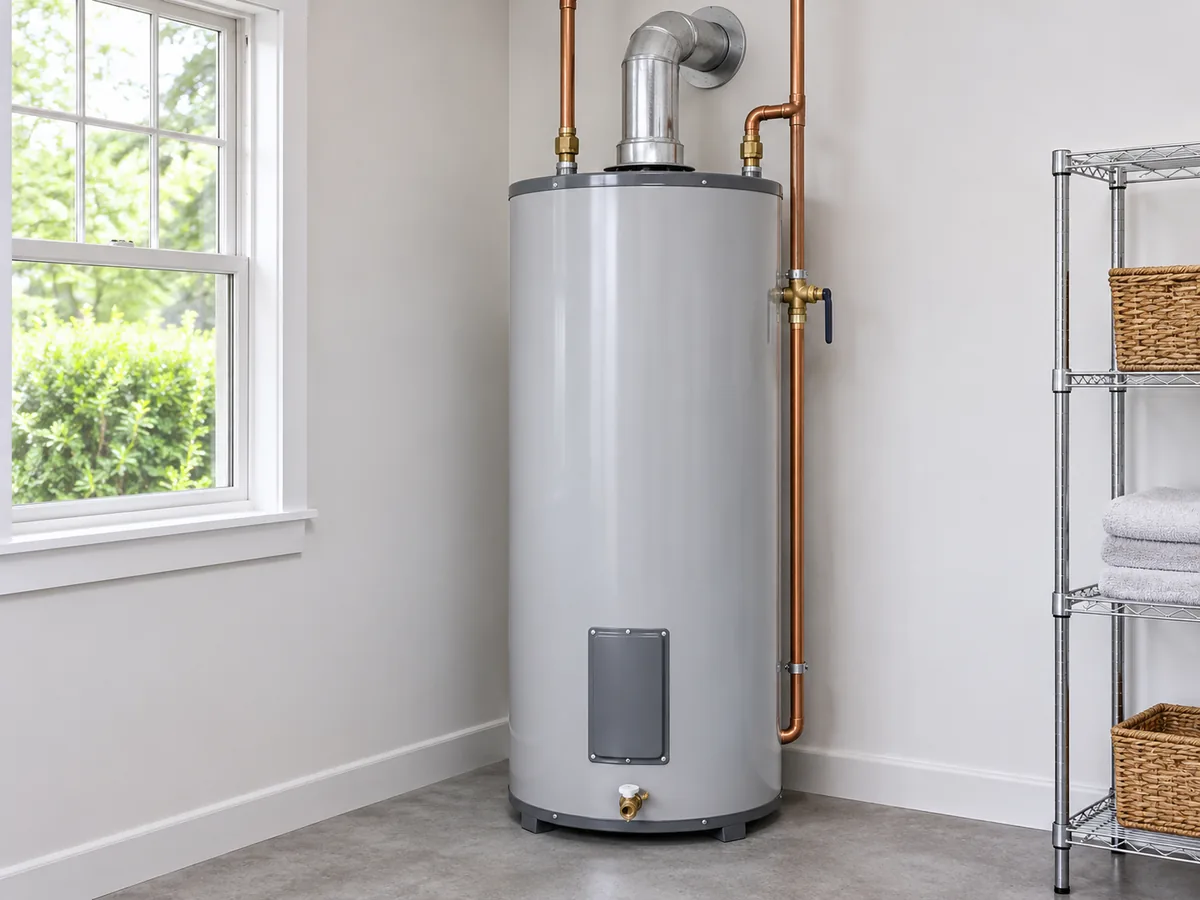
A leaking water heater is either a cheap fitting or a dying tank, and location tells you which. Dry everything, run hot water, then watch where the first drip forms.
Find the source
- Top fittings. Drips at inlet, outlet or TPR discharge pipe often mean loose connections or a faulty valve, usually a $150-$550 repair visit (RemodelCalc, 2026).
- Drain valve. A weeping plastic drain valve can be capped or replaced without replacing the unit.
- Bottom or tank seam. Water pooling under the tank with no fitting above it means internal corrosion. Replacement time: $900-$2,500 installed.
- Condensation. New or cold-start units sweat. If it dries after a full heating cycle, it is not a leak.
What to do now
Shut the cold-water inlet and, for gas, set the control to pilot; for electric, flip the breaker. Drain a bucket from the drain valve to relieve pressure, then call a plumber if the tank body itself leaks.
Sources
- RemodelCalc 2026 (single repair visits $150-$550).
- Angi 2026 water heater replacement data ($882-$1,826).